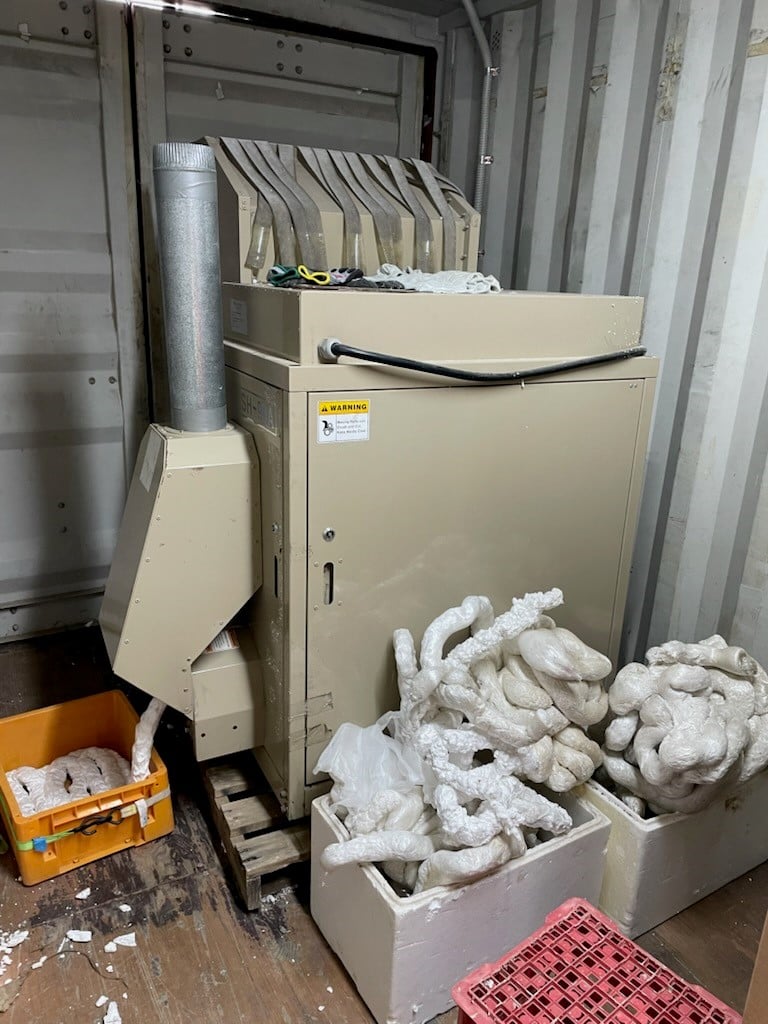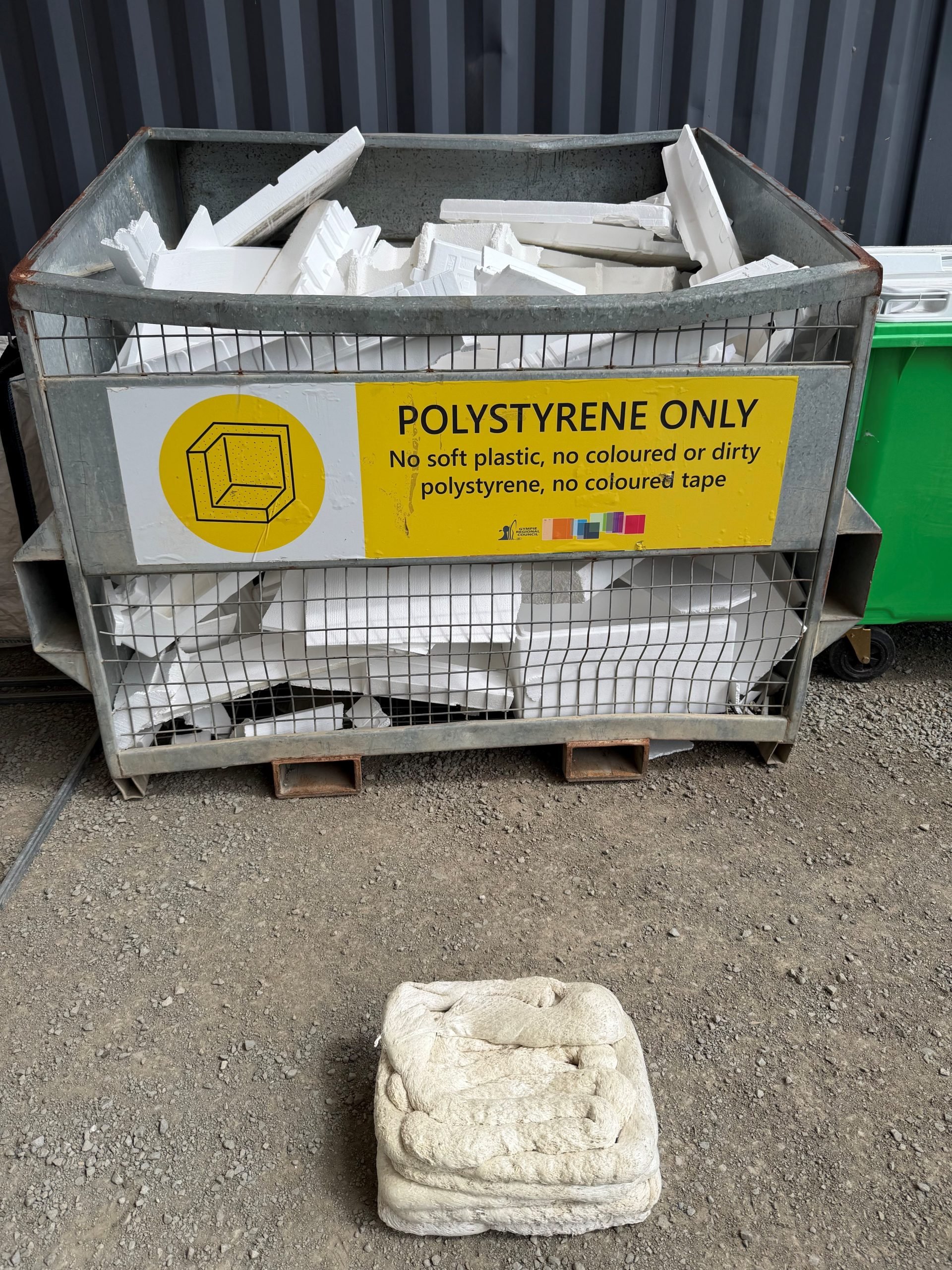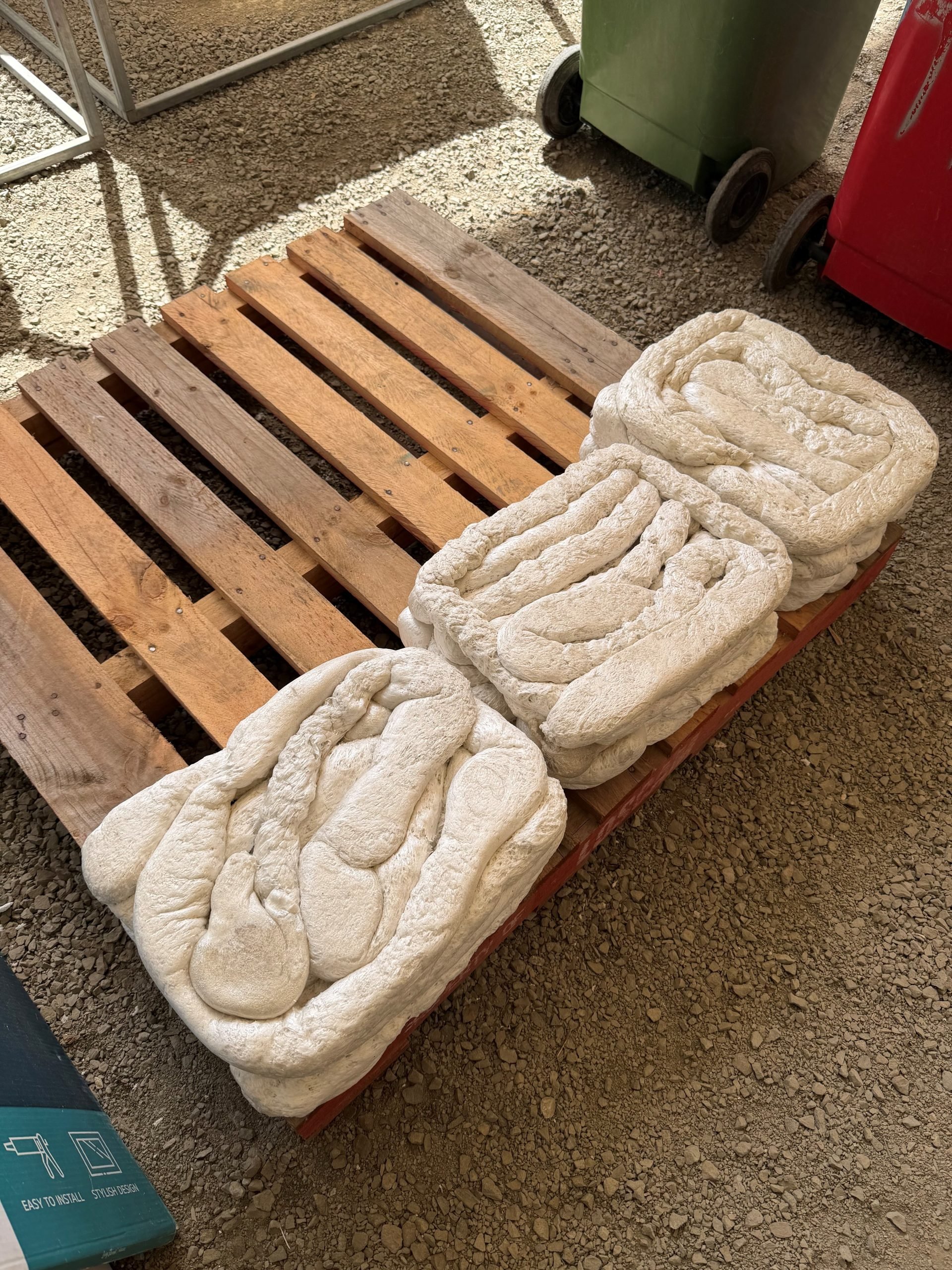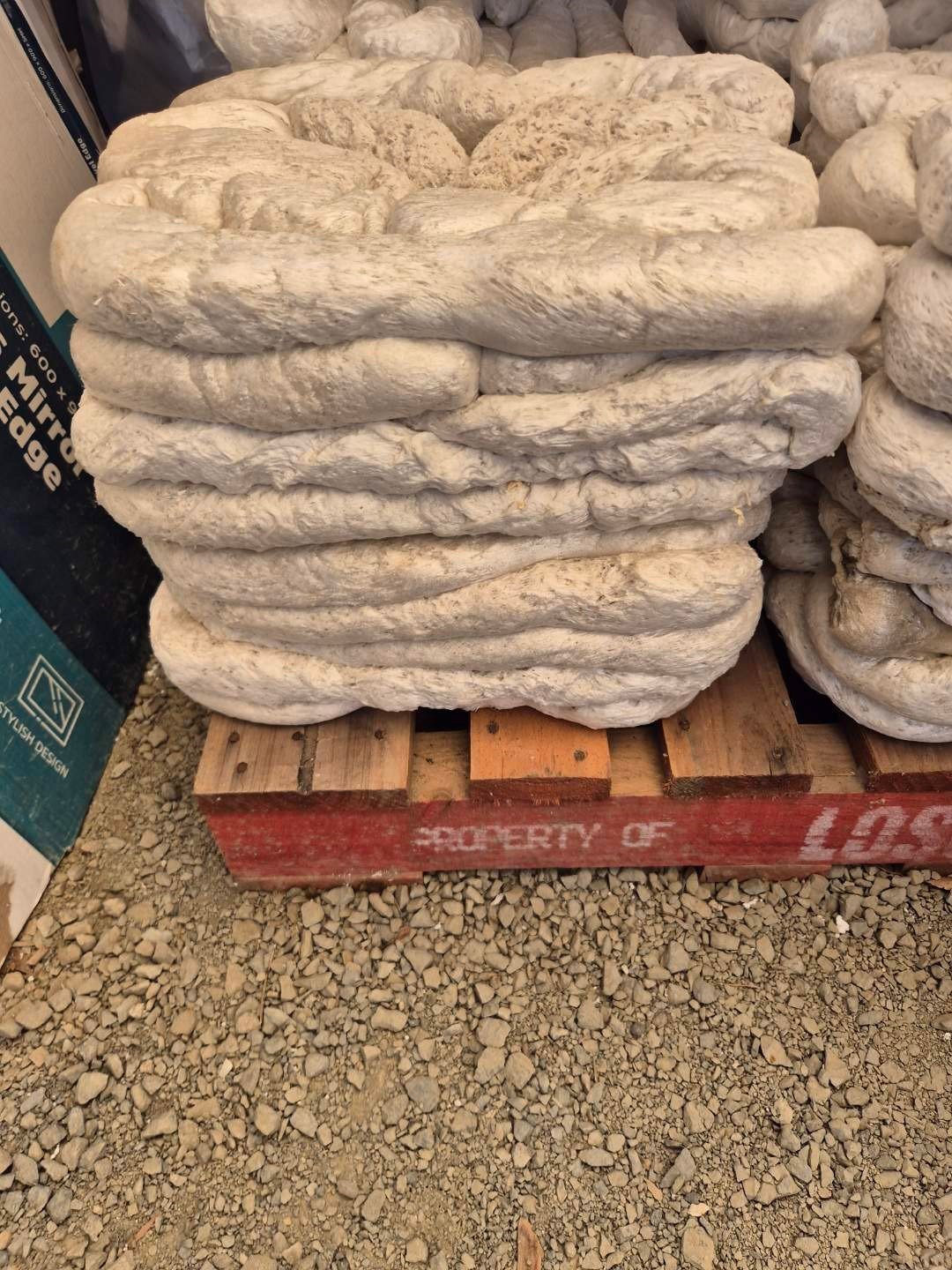

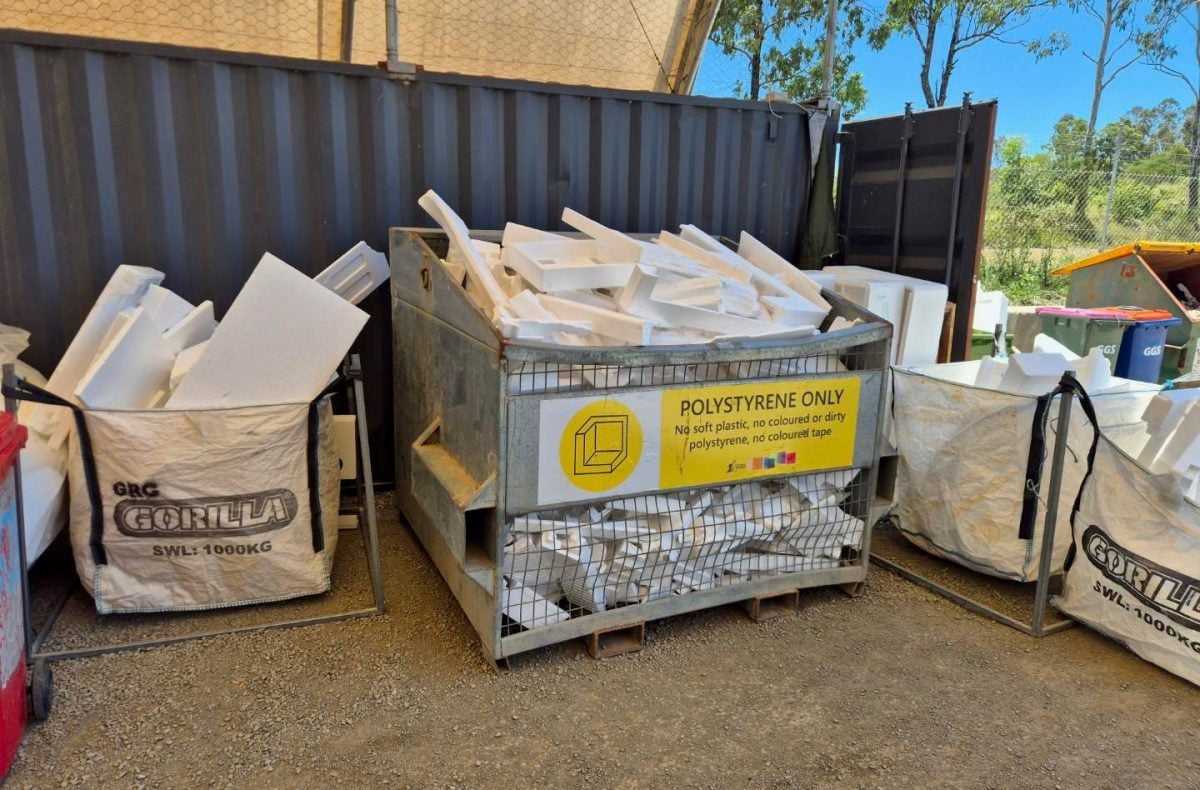
The Outlook team in Gympie, Queensland has delivered a fantastic new initiative to help tackle one of the most challenging waste streams we deal with – expanded polystyrene (EPS).
Polystyrene is notoriously difficult to manage. It is lightweight, bulky, and can’t be compacted in the usual way. This means it takes up a huge amount of space and is costly to transport. Historically, it has also been a material with limited recycling options leaving many industries with few practical solutions.
But change is here.
A new machine with a big impact
Gympie has introduced a new polystyrene processing machine that can take a full skip bin of EPS and reduce it down into a single small, dense cube. This simple but powerful change transforms EPS from a hard-to-handle waste stream into a brick-like recycled product that is easy to store, stack, transport and – most importantly, reuse.
How the process works
The recycling process begins with cleaning the polystyrene to remove contaminants such as tape, food waste and other materials. It is then granulated into small pieces before being compacted through heat and pressure into dense, transportable blocks. This is a great example of operational innovation improving safety, efficiency and sustainability all at once.
What happens next? Real applications in the market
Once densified, recycled EPS becomes a valuable lightweight material with strong after-market demand. These blocks can be used in civil engineering and infrastructure as geofoam for road embankments, bridge approaches, retaining walls and slope stabilisation, particularly in areas with weak or compressible soil. In building and construction, recycled polystyrene can be repurposed into insulation panels and building components and can also be mixed into lightweight concrete products. Beyond construction, the material can be reprocessed into a range of commercial and industrial products including outdoor furniture, decking, garden products and various household goods. Due to its low water absorption, it also has marine and industrial applications such as floatation products and protective packaging.
Sustainability that also supports the bottom line
Even better this initiative is not only solving a waste problem – it’s also generating value. Outlook receives a healthy rebate for every tonne of recycled polystyrene produced, helping turn a historically costly waste stream into a positive commercial outcome.
What happens next? Real applications in the market
Once densified, recycled EPS becomes a valuable lightweight material with strong after-market demand. These blocks can be used in civil engineering and infrastructure as geofoam for road embankments, bridge approaches, retaining walls and slope stabilisation, particularly in areas with weak or compressible soil. In building and construction, recycled polystyrene can be repurposed into insulation panels and building components and can also be mixed into lightweight concrete products. Beyond construction, the material can be reprocessed into a range of commercial and industrial products including outdoor furniture, decking, garden products and various household goods. Due to its low water absorption, it also has marine and industrial applications such as floatation products and protective packaging.
Sustainability that also supports the bottom line
Even better this initiative is not only solving a waste problem – it’s also generating value. Outlook receives a healthy rebate for every tonne of recycled polystyrene produced, helping turn a historically costly waste stream into a positive commercial outcome.
This is a great story of local initiative creating broader organisational benefit delivering solutions across multiple sectors while supporting Outlook’s sustainability and circular economy goals.
Well done to the Outlook Gympie team for progressing this initiative and leading the way.
Click images to view gallery